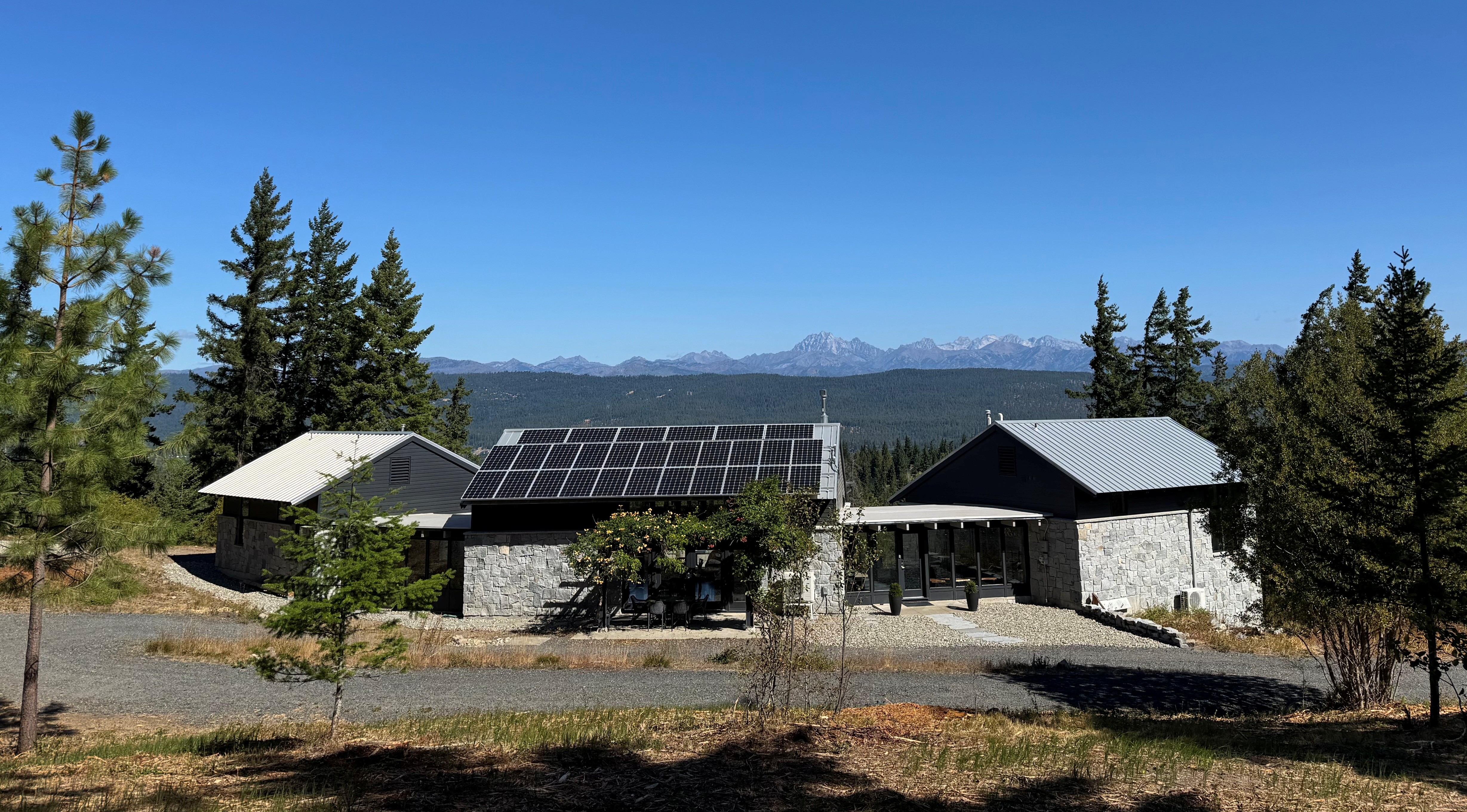
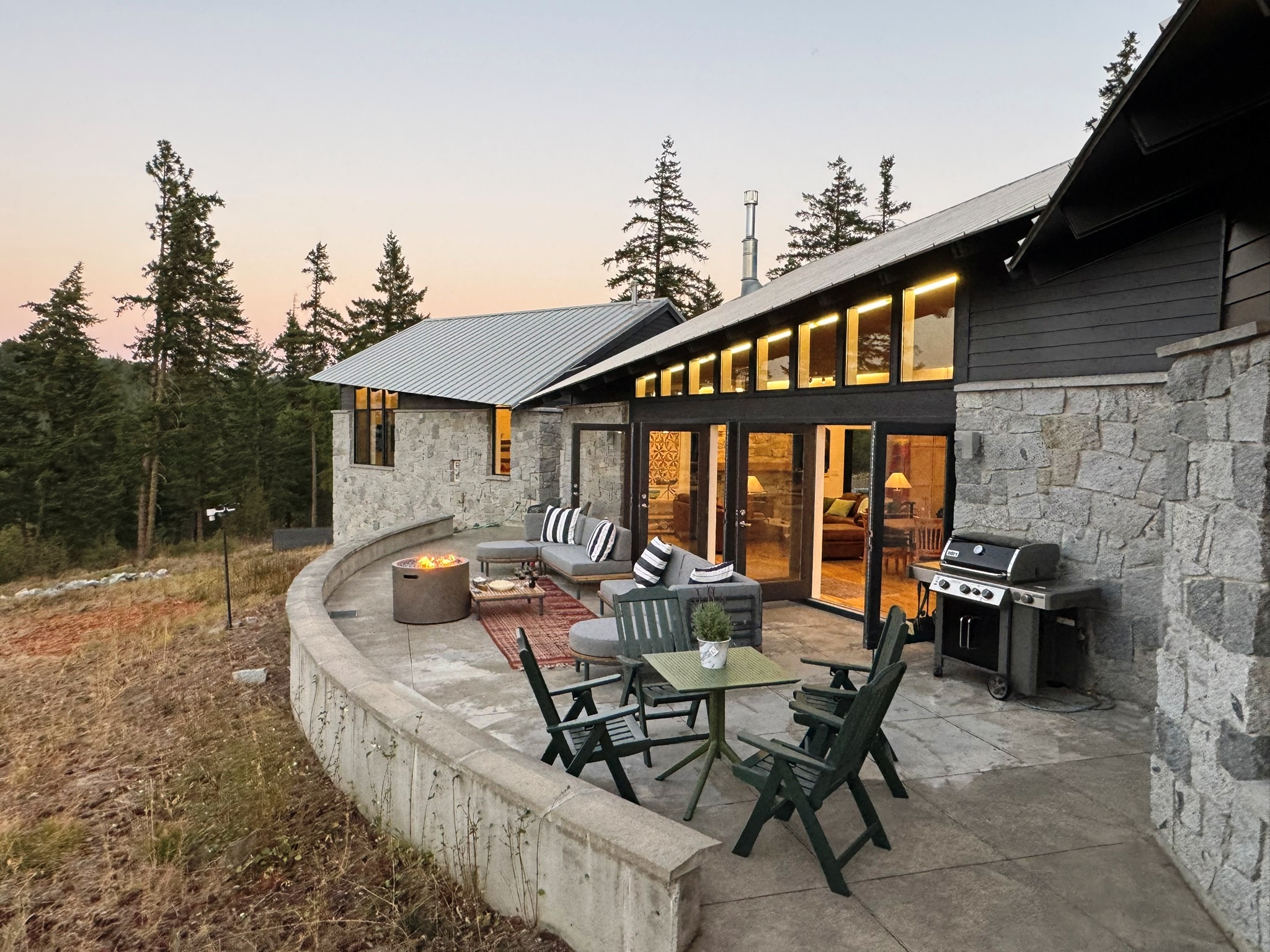
320 Palouse was designed and built between 1999 and 2001 by Seattle architect Lane Williams as a mountain retreat for the family of a retired Microsoft executive. Set high above Cle Elum, the home is composed of three stone-clad pavilions joined by glass breezeways — blending Northwest materials with modernist clarity and a deep connection to the surrounding forest and ridge.
The stone walls are laid in the rubble tradition, sourced from the same granite outcroppings that define the ridge. Floor-to-ceiling glass opens the main pavilion to panoramic views of the Stuart Range. Two additional pavilions — one housing the bunk suite, one the owners' retreat — frame a curved stone patio centered on a firepit.
The project received a Commendation from AIA Seattle in 2002.
◆ AIA Seattle Commendation, 2002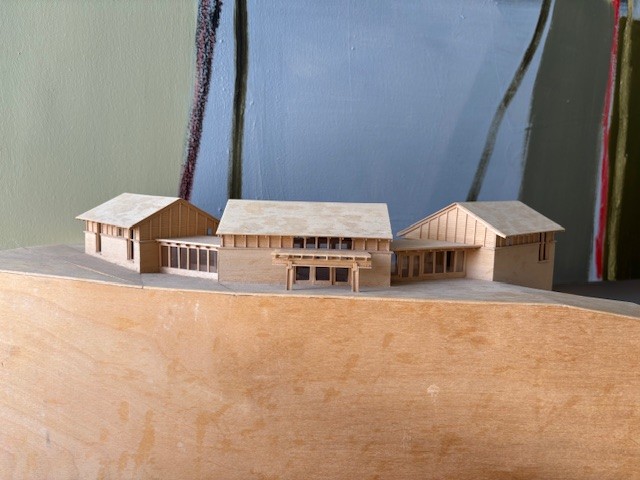
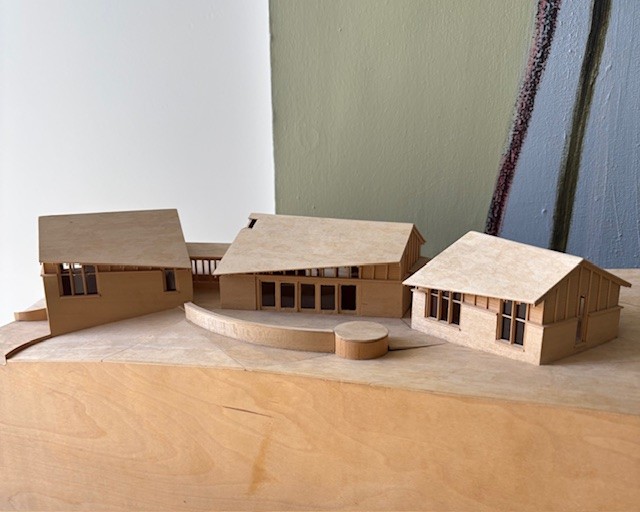
"The model is one of only three in my Palm Springs office. The design is one of my favorites." — Lane Williams, Architect
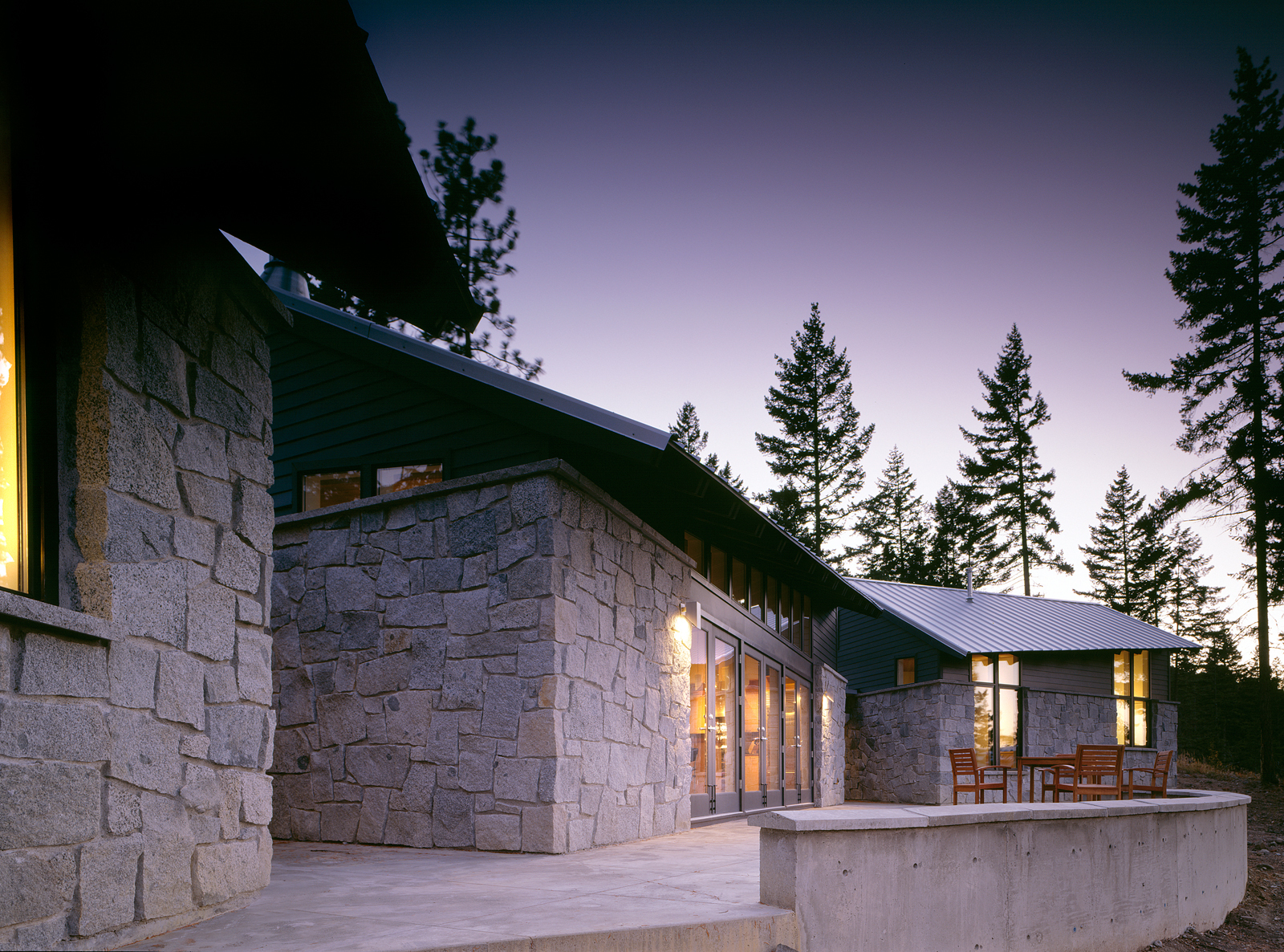
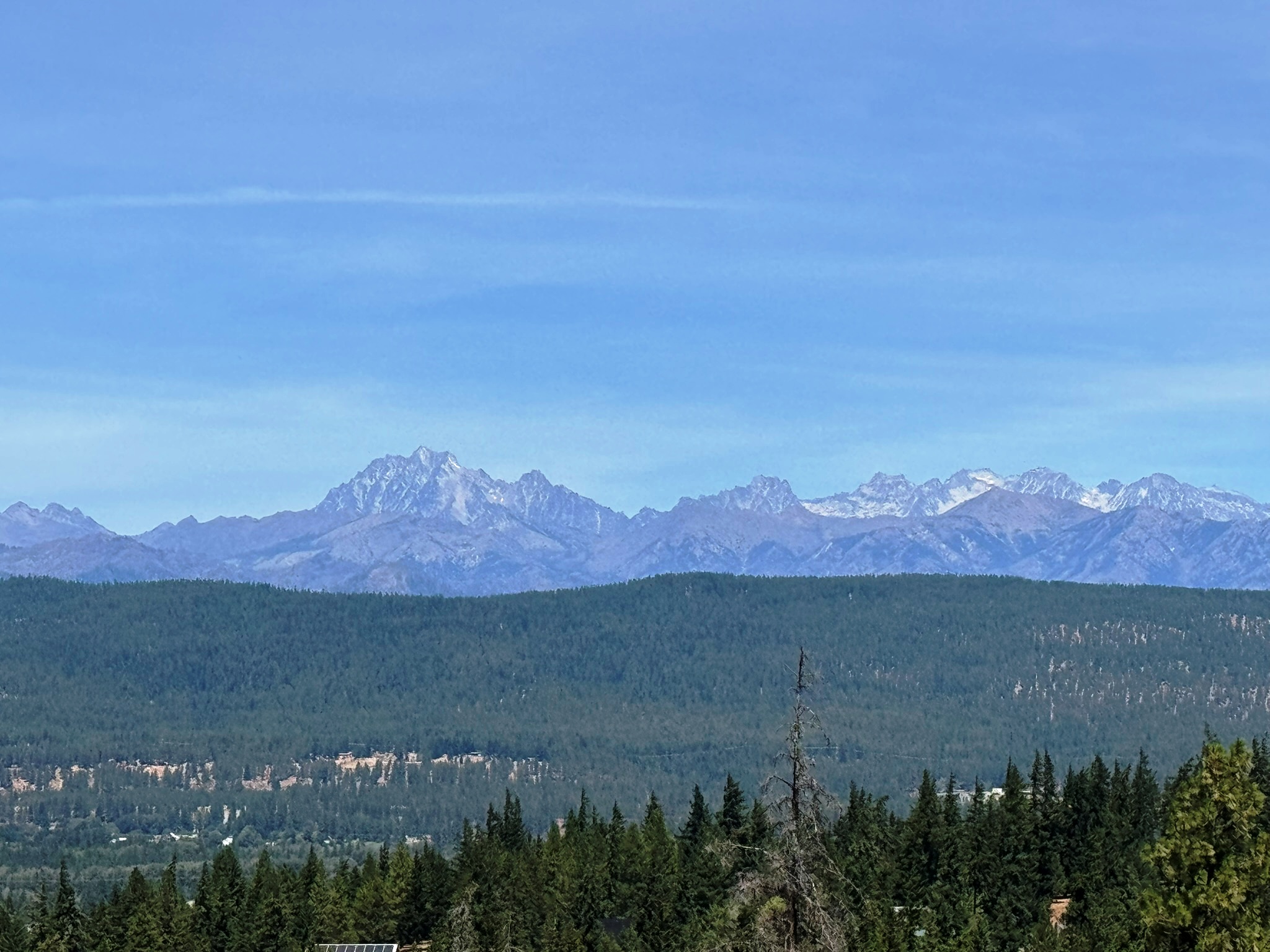
At 2,500 feet — 600 feet above Cle Elum proper — the ridge delivers cooler air, superior visibility, and consistently better air quality than the valley below. The Stuart Range fills the western horizon from almost every room and from the full length of the patio.
The curved stone patio wraps around the main pavilion, centered on a wood-burning firepit with seating for the whole group. The patio faces west — prime position for watching the sun drop behind the Stuart Range. In winter the patio fills with snow; in summer it catches the late light until well past eight.
Inside, the great room opens fully to the patio through glass folding doors. Three fireplaces — in the main pavilion, the bunk suite, and the owners' retreat — keep the house warm through shoulder seasons. A full game room, professional-grade kitchen, and separate laundry round out the amenities.
The property is fully off-grid capable, with a 48-panel solar array and whole-house battery backup. A Level 2 EV charger is available for guests.
Swat Valley, Pakistan · c. 19th Century
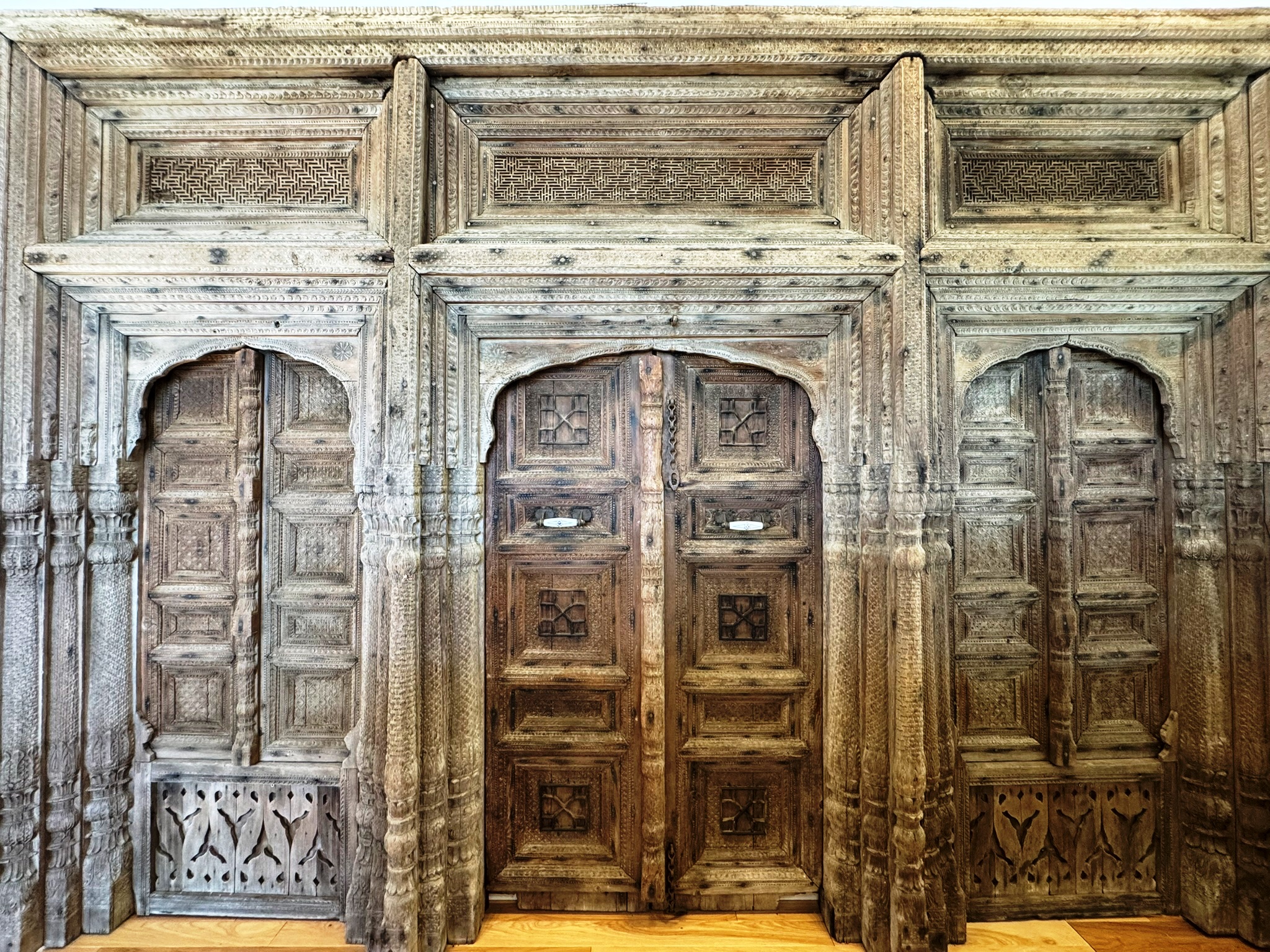
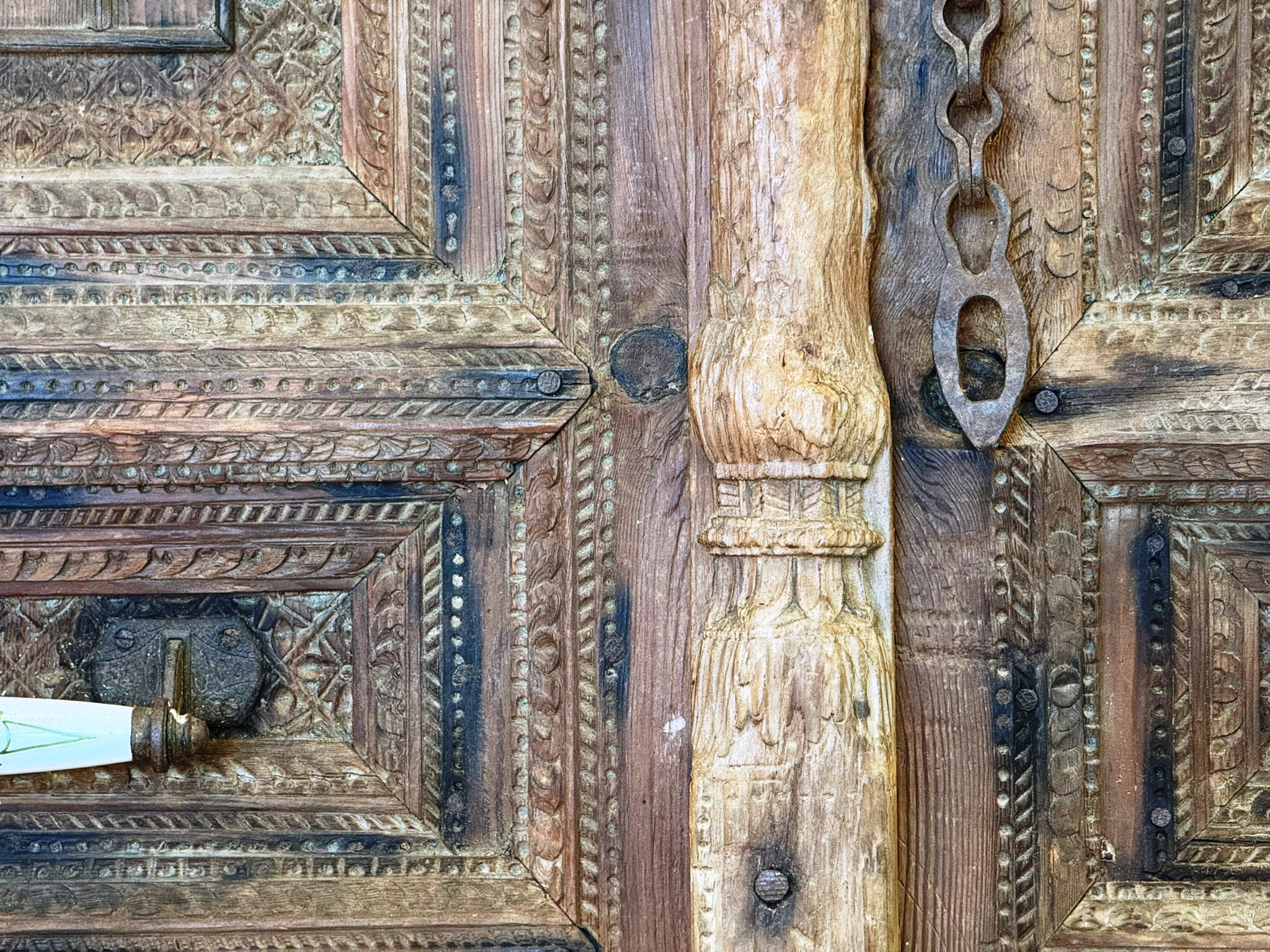
The carved wall in the main pavilion is a historic architectural fragment from the Swat Valley of northern Pakistan — the same region where Malala Yousafzai was born and raised.
Originally part of a traditional house front near Mingora, it was purchased around 2008 by Alastair Hull, a British expert in South Asian art and a longtime friend of the owners.
"I bought this house front in Mingora, Swat, more than 15 years ago. Looking closely at the decoration and carving, it definitely comes from that area, possibly a little further north up the valley. The carving on the columns — particularly the acanthus leaves — and the arched shapes over the doors are typical of the region around Baikot and Khwazakhela. It's an amazing piece, impossible to get now in Pakistan."
— Alastair Hull, specialist in South Asian art
The wall likely came from a home damaged by earthquake or landslide, salvaged to preserve its artistry. It now stands here at 320 Palouse as a bridge between the Hindu Kush and the Cascades, echoing the granite rubble walls and craftsmanship of this mountain retreat.
Even more remarkable — this is the second floor of the original structure. The beam that supported it now rests outside the private suite bath on granite stones, and its underside still shows the joinery that once supported it from below.
Everything you need to know about the house, the ridge, and the surrounding area — in one place.
Open the GuideViews from the ridge, right now · updated in real time